Tax glossary
Child deduction (Kinderabzug)
The child deduction is a fixed allowance that reduces your taxable income for each child — by CHF 9,300 for Zurich cantonal and municipal tax and CHF 6,800 for direct federal tax (tax period 2025).
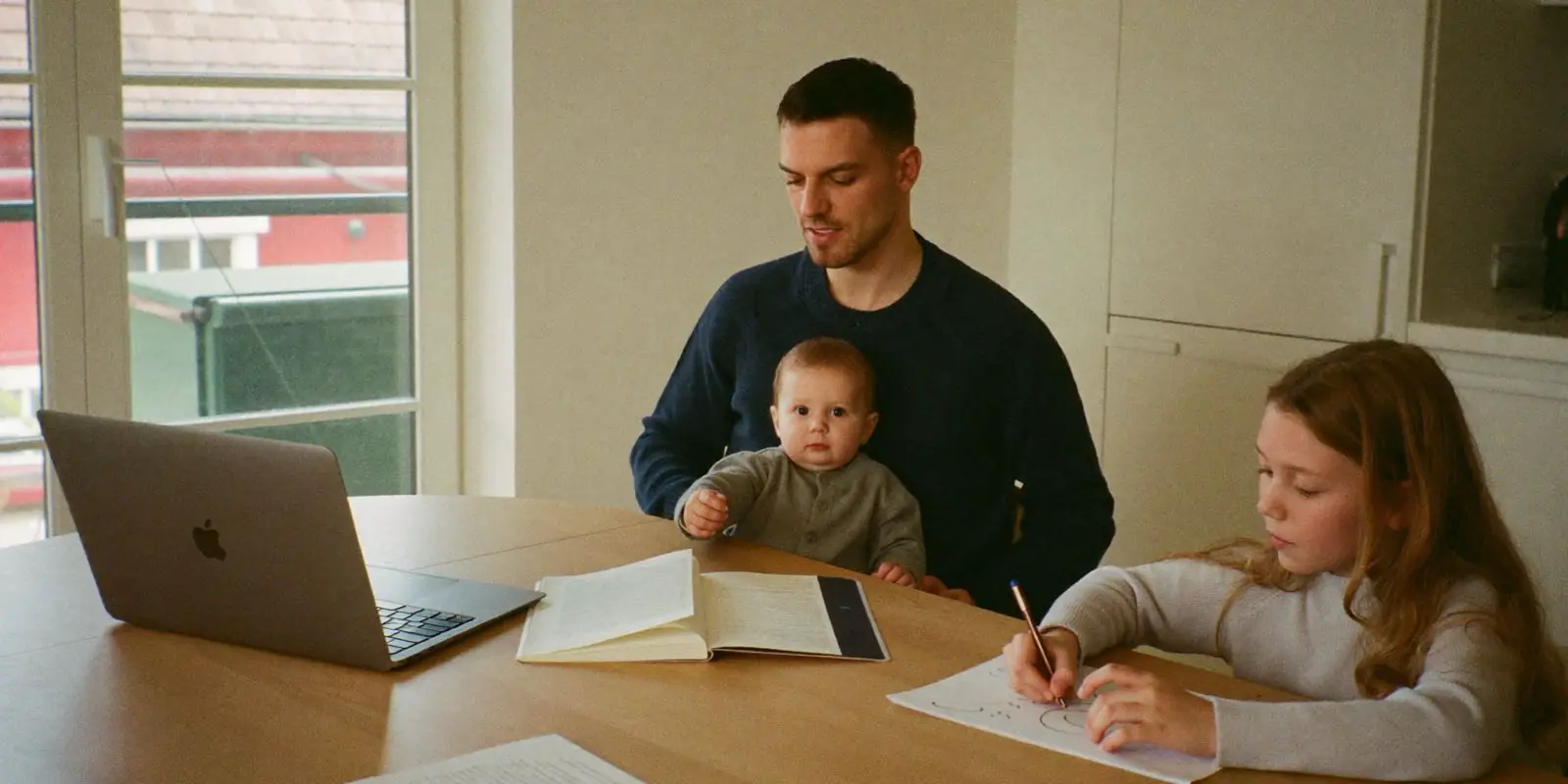
The child deduction is one of the so-called social deductions in Swiss tax law. You do not need receipts: if you meet the conditions, a fixed amount per child comes off your income, regardless of what the child actually costs you. The idea is simple — a family on the same income as a childless couple has less money to spare, and the tax system recognises that.
For the 2025 tax period, the Canton of Zurich allows CHF 9,300 per child for cantonal and municipal tax, and the direct federal tax allows CHF 6,800. At federal level there is a second benefit on top, the parental tariff: CHF 263 per child is deducted directly from the tax bill itself. Your insurance premium deduction also increases for every child — by CHF 1,300 in the canton and CHF 700 for federal tax.
What counts is your situation on 31 December of the tax year. A baby born in December entitles you to the full deduction for the whole year — there is no pro-rating by month. Conversely, the deduction lapses if an adult child finished their first education before year-end and is now earning their own living.
Who can claim the child deduction
Parents can claim it for children under 18 whom they support, and for adult children still in their first education or vocational training whose living costs the parents mainly cover. First education includes an apprenticeship, upper secondary school and university up to the first professional qualification (usually including a master's) — also when a vocational baccalaureate and a university of applied sciences follow an apprenticeship without a long break.
- Children under 18: the deduction goes to the parents who support the child
- Adult children in first education: as long as the parents cover the main part of their living costs
- Foster children: possible if no foster-care allowance covers their upkeep
- Children with a high apprentice wage or their own assets: the deduction may be refused because the parents no longer provide the main support
Separated, divorced and unmarried parents
If the parents do not live together, the outcome depends on who has parental responsibility (elterliche Sorge) and whether maintenance is paid. Canton and Confederation follow the same logic; only the amounts differ.
- Joint custody, child maintenance paid: the receiving parent gets the full deduction, the paying parent deducts the maintenance
- Joint custody, no maintenance: each parent gets half (canton CHF 4,650, federal CHF 3,400)
- Sole custody: the parent with custody gets the full deduction
- Adult child in education: whoever mainly supports the child gets the deduction — maintenance payments are then no longer deductible
The child deduction and the tax rate
A child also changes which tax scale applies to you. In the Canton of Zurich, single parents are taxed at the more favourable married rate; at federal level, households with children get the parental tariff. For lower and middle incomes, this rate effect is often worth more than the deduction itself.
The value of the deduction depends on your marginal tax rate. Reducing your taxable income by CHF 9,300 at a marginal rate of 20 percent saves about CHF 1,860 in cantonal and municipal tax — per child, every year.
Example: a family in Winterthur with a student daughter
A married couple in Winterthur-Seen have two children: a son aged 12 and a daughter aged 21 who studies social work at ZHAW and earns CHF 8,000 a year from a part-time job. Both children qualify for the full deduction — the daughter is still in her first education, and her side job does not cover her living costs.
For cantonal tax, 2 × CHF 9,300 = CHF 18,600 is deducted; for federal tax 2 × CHF 6,800 = CHF 13,600, plus CHF 263 twice straight off the tax bill. On top comes the higher insurance deduction of 2 × CHF 1,300 (canton) and 2 × CHF 700 (federal). Had the couple left their daughter off the return because she is "already an adult", they would have lost CHF 10,600 in cantonal deductions alone.
Frequently asked questions: Child deduction (Kinderabzug)
Do I get the deduction for a child born in December?
Yes, in full. What matters is the situation on 31 December; there is no reduction by month.
Up to what age can I claim the child deduction?
There is no fixed age limit in the law. The adult child must be in their first education and you must cover the main part of their living costs. In practice, the deduction usually ends with the first professional qualification or the master's degree.
Do I have to apply for the child deduction?
No. You list your children on the first page of the tax return and the tax office grants the deduction automatically. For adult children, state the type of education and keep a confirmation from the school or university to hand.
We are not married but live together with our child. Who gets the deduction?
With joint custody and no maintenance payments, each parent gets half. If one parent pays child maintenance to the other, the recipient gets the full deduction and the payer deducts the maintenance.
Questions about this term?
We prepare your tax return — including the tricky parts.
You don’t need to master the jargon. Send us your documents; we check every deduction and file electronically on your behalf.