Tax glossary
Property maintenance costs
Property maintenance covers all value-preserving expenditure on a property — it is tax-deductible, either as a flat rate or at actual cost, and you may choose afresh in every tax period.
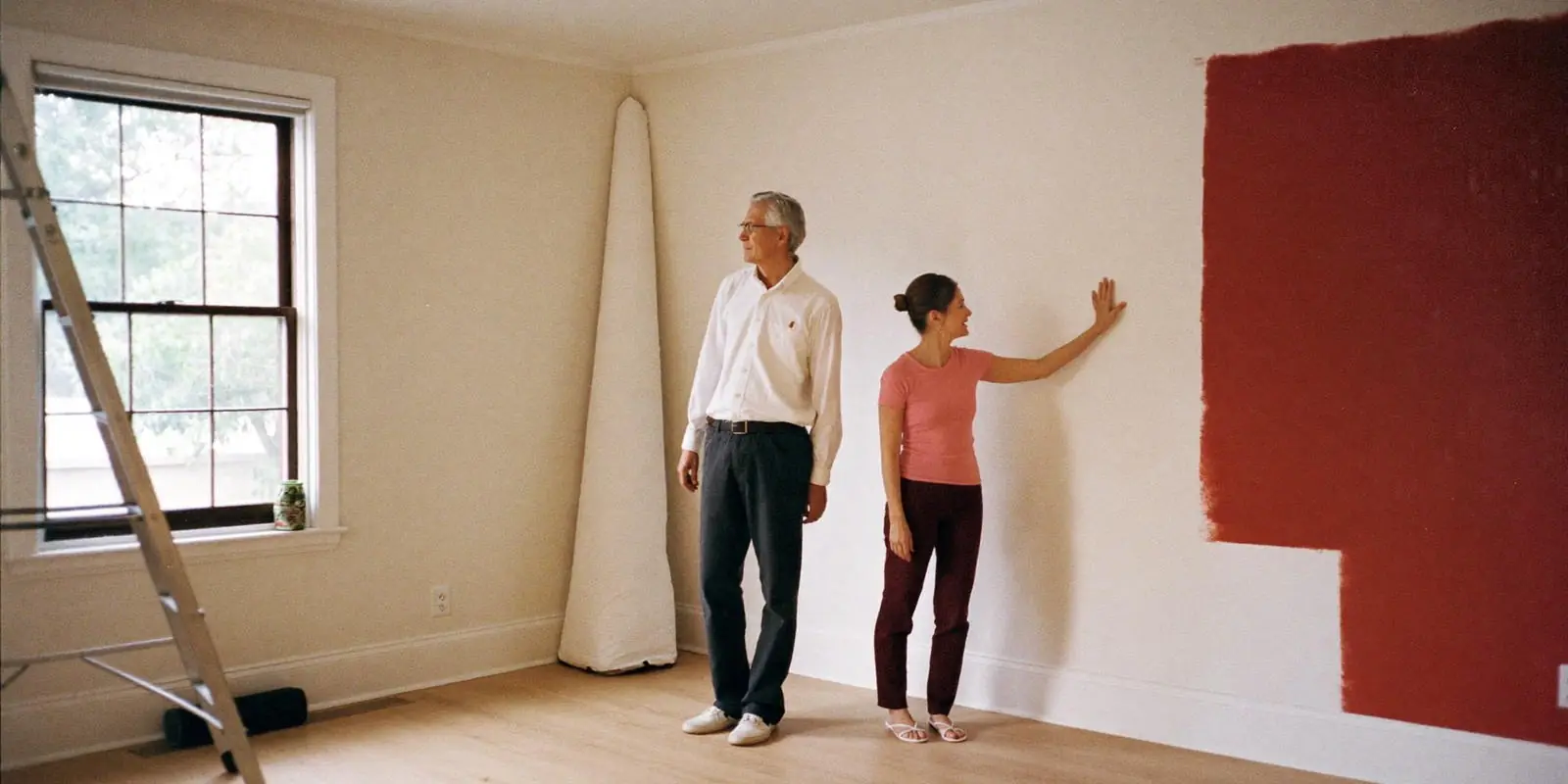
If you own a property, you may deduct the cost of maintaining it from your income. Only value-preserving expenditure is deductible — anything that maintains or restores the existing condition. Value-enhancing investments that raise the standard are not deductible; they only come into play when you sell, for property gains tax.
In every tax period you can choose between the flat-rate deduction and the actual costs. The flat-rate deduction is a percentage set by the canton of the imputed rental value or of rental income, graded according to the age of the property. Actual costs must be supported by receipts.
This annual choice is the key planning lever for homeowners: in years without major works you take the flat rate, and in the year you renovate you claim the actual costs.
Value-preserving or value-enhancing
This distinction decides whether a cost is deductible — and it is made afresh for every invoice.
- Value-preserving: replacing the heating, repainting, repairing the roof, replacing the kitchen with one of equivalent quality
- Value-enhancing: an extension, converting the loft, installing a fireplace for the first time, raising the standard
- Mixed: larger renovations are split item by item — the contractor’s invoice should make this possible
- Also deductible: insurance premiums, property taxes, management fees paid to third parties
Energy-saving measures
Investments in energy saving and environmental protection are treated in the same way as maintenance costs, even if they add value — for example replacing an oil boiler with a heat pump or insulating the façade.
If such costs exceed your taxable income, in the Canton of Zurich they can be carried forward to the two following tax periods. This prevents part of the deduction from going to waste.
Planning the timing
Because of progression, a deduction has a greater effect the higher your income is in that year. It is therefore often advantageous to spread larger renovations over two tax periods — by having the deposit and the final payment fall in different years.
In the Canton of Zurich, the date of invoicing or payment is decisive. This planning must be done before the renovation, not afterwards when filling in the tax return.
Example: a bathroom renovation over two years
A bathroom renovation costing CHF 42,000 replaces the existing fittings with ones of comparable quality — so it is value-preserving and fully deductible. With a taxable income of CHF 110,000, deducting the full amount in one year would push income down to CHF 68,000, reaching into lower progression bands.
If the work is timed so that CHF 21,000 is invoiced and paid in December and CHF 21,000 in January, the deduction takes effect in the top progression band in both years. Depending on the circumstances, the saving compared with a single deduction runs into four figures.
Frequently asked questions: Property maintenance costs
Can I deduct my own labour?
No. Only invoices actually paid to third parties are deductible. Materials that you buy and install yourself, however, do count as deductible costs.
What about garden maintenance?
Ongoing upkeep of the grounds is deductible, whereas landscaping a garden for the first time after a new build is value-enhancing.
Do I have to make the same choice for all my properties?
No. The choice between flat rate and actual costs is made per property — you can claim actual costs for your own home and the flat rate for a rental property.
Questions about this term?
We prepare your tax return — including the tricky parts.
You don’t need to master the jargon. Send us your documents; we check every deduction and file electronically on your behalf.